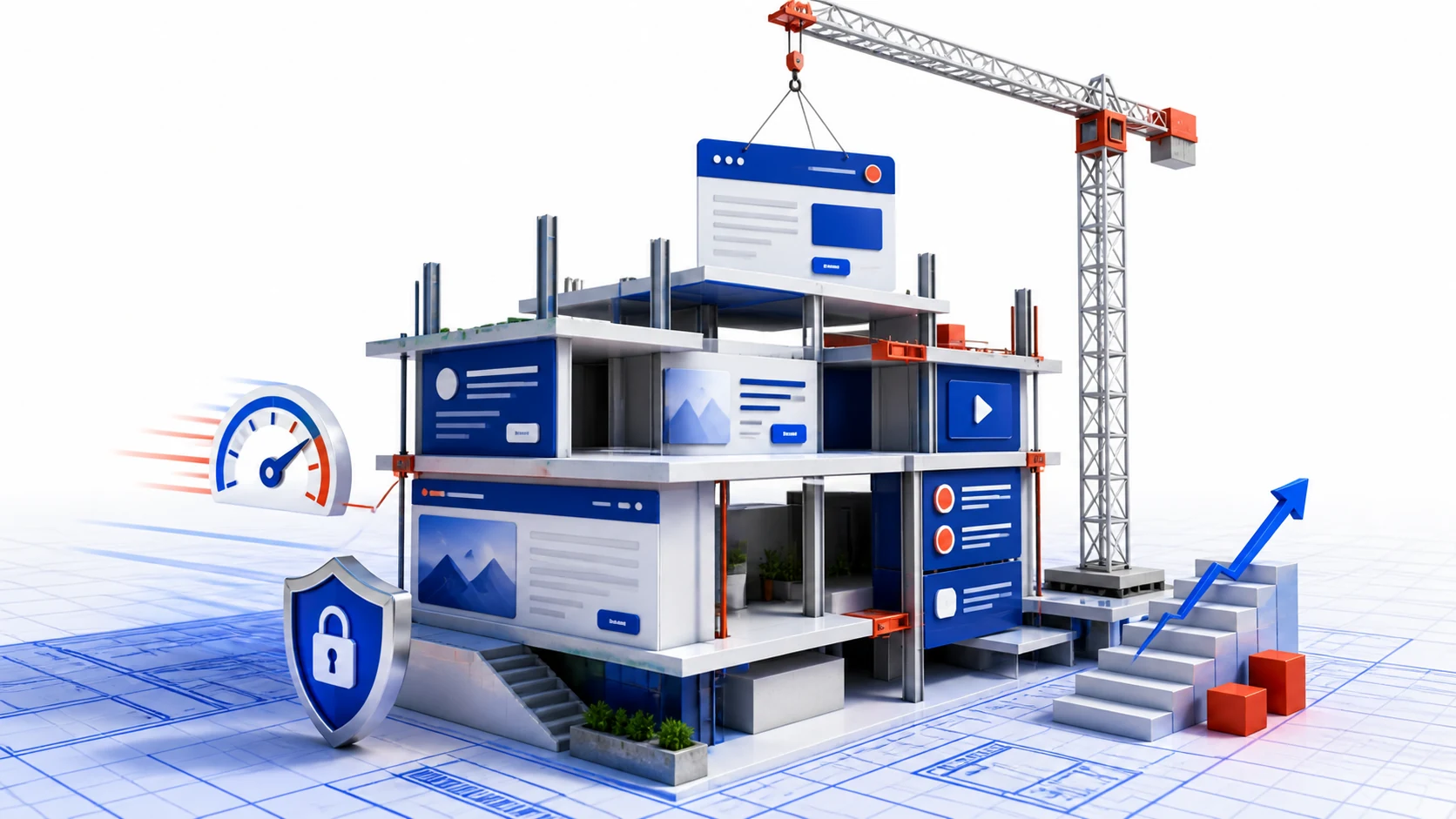
A business website is not successful simply because it looks modern. It succeeds when the right customer can understand the offer, trust the company and take the next useful step without unnecessary effort. That makes website development a business and customer-experience decision, not only a technical project.
Start with the job the customer came to complete
Visitors usually arrive with a question: Can this company solve my problem? Is the service appropriate for me? What will happen if I make contact? A strong website answers those questions in a sensible order. Before discussing layouts or software, define the audience, the problem being solved and the primary action each page should support.
The homepage should establish relevance quickly. Service pages should explain outcomes, scope and fit. About and case-study content should reduce uncertainty. Contact should make starting a conversation feel clear and safe.
Make clarity the first design requirement
Customers should not need to decode clever headlines or search through several menus to understand the offer. Use direct page titles, short introductions and descriptive links. Keep one primary action visually prominent while still giving people a lower-commitment route to learn more.
- State who the service is for and what it helps achieve.
- Use a navigation structure that reflects customer questions.
- Keep calls to action specific, consistent and honest.
- Remove claims that cannot be demonstrated or responsibly supported.
Build speed, mobile usability and accessibility into the foundation
Performance affects both customer confidence and search visibility. Compress images, reserve their display dimensions, limit unnecessary scripts and use reliable hosting and caching. Test the complete journey on a phone, not only the homepage. Forms, menus, buttons and long pages must remain comfortable to use at small screen sizes.
Accessibility is part of quality. Semantic headings, meaningful alternative text, keyboard navigation, visible focus states and sufficient colour contrast help more people use the site and often improve the experience for everyone.
Choose a content system the team can maintain
A website becomes less useful when routine updates require a developer. WordPress can provide a practical publishing system when page types, reusable components and editor permissions are planned carefully. The goal is controlled flexibility: editors should be able to update genuine content without accidentally breaking the design system.
Match the technical approach to the real brief
A prebuilt theme, a configurable page builder and a custom WordPress theme solve different problems. The cheapest starting option can become expensive when teams spend months working around layout restrictions, excessive scripts or a content model that does not match the business. Custom development is not automatically better either. It should earn its place through a genuine need for distinctive brand expression, reusable content structures, integrations or carefully controlled performance.
Ask how the proposed approach will handle new services, campaigns, multilingual content, permissions and integrations after launch. Review what the editor will look like, who owns licenses and how updates are tested. A sound proposal should make both the customer experience and the operating model easier to understand.
Evaluate a development partner by the decisions they expose
A useful discovery process should challenge vague requirements before estimating the build. The team should ask about audiences, content ownership, conversion paths, accessibility, analytics, security and future change. Be cautious when a proposal concentrates on the number of pages while leaving these decisions undefined.
- Will strategy, content and design be resolved before high-cost development?
- How are responsive behavior and accessibility reviewed?
- Which integrations and third-party services affect performance or privacy?
- What testing evidence is provided before launch approval?
- Who maintains the theme, plugins, backups and hosting after release?
Plan trust and measurement before launch
Trust signals should be real and relevant. Explain the process, publish useful expertise, show approved evidence and make privacy expectations clear. Then define what will be measured: qualified enquiries, service-page engagement, successful form completion or another business outcome. Traffic alone does not prove that a website is working.
Treat launch as the start of an operating cycle
Real visitors will reveal questions that workshops and prototypes cannot fully predict. Agree who reviews analytics, form quality, search visibility, performance and customer feedback during the first 30 to 90 days. Fix genuine obstacles before adding new features. Maintain a change log so future decisions reflect evidence rather than personal preference.
The same discipline protects technical health. Schedule updates, backups, security reviews and performance checks. A website that was fast and reliable on launch day can deteriorate when large images, tracking tools and unreviewed plugins accumulate.
A useful website-development checklist
- Clear audience, offer and page purpose
- Logical information architecture and descriptive navigation
- Responsive layouts tested on real device sizes
- Fast images, restrained scripts and stable page rendering
- Accessible controls, forms and content structure
- Secure forms, backups and an update process
- Editable content types with appropriate governance
- Analytics connected to meaningful customer actions
The best development process connects all of these decisions. When strategy, content, design and engineering move in the same direction, the website becomes a dependable part of the customer journey rather than a digital brochure that slowly goes out of date.
Frequently asked questions
How long should a business website project take?
Timing depends on scope, content readiness, integrations and review availability. A focused marketing website may take several weeks, while a larger content or platform project needs a phased plan.
Should we use a template or commission a custom WordPress theme?
A quality template can suit a simple, conventional brief. Custom development is more appropriate when the brand, content model, customer journey or integrations require decisions that a generic theme cannot support cleanly.
What should be measured after launch?
Measure successful customer actions, form completion, service-page engagement, organic landing-page performance and real-user experience alongside traffic. The useful measures should reflect why the website exists.