A logo can look dated without being the main reason a business feels difficult to understand. Sometimes the real problem is inconsistent use. Sometimes the offer has changed so much that the existing identity no longer fits. Those are different problems, and they call for different amounts of work.
Before deciding to rebrand, write down what is not working. Be concrete. Customers misunderstand the service, the website looks unrelated to your proposals, or the name suggests a market you no longer serve. A useful brief starts there.
What a brand refresh usually changes
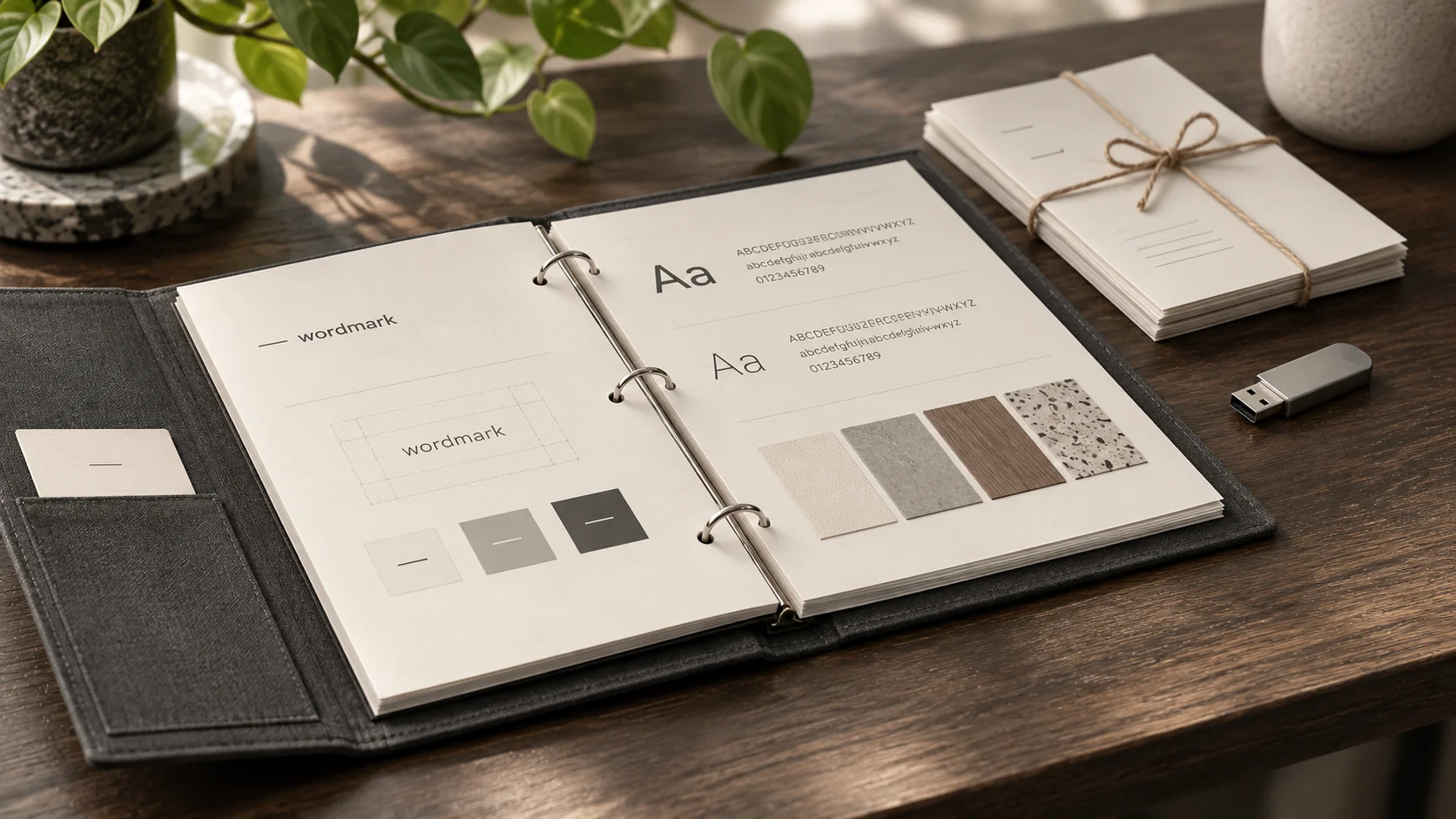
A refresh keeps the recognisable foundations while improving how they work. It might refine typography, simplify a colour palette, update photography or make the language clearer. The name and broad positioning may remain intact.
This can suit a business whose offer is still relevant but whose materials have become uneven. The aim is not to preserve every old choice. It is to retain what people recognise and fix what is getting in the way.
When a wider rebrand makes sense
A broader rebrand may be appropriate when the business serves a different audience, offers a substantially different service or has a positioning problem that surface changes cannot resolve. It can involve the name, message, identity and the way the offer is organised.
There is no universal boundary between a refresh and a rebrand. Providers use the terms differently. Compare proposed decisions and deliverables rather than relying on the label at the top of the quotation.
Check whether the problem is visual or strategic
Look at a small set of real customer touchpoints together: the website, a proposal, an email, a social profile and a sales presentation. Ask whether they describe the same business. Then review the questions customers ask. Confusion about what you sell needs attention to the offer and message, not just a new typeface.
For a hypothetical consultancy, the core identity might still be familiar and useful, while each service has acquired a different description over time. A focused message and template refresh could be the sensible first step. If that consultancy has moved into an entirely different market, the underlying positioning deserves a deeper review. These are decision examples, not client results.
Protect the parts that already work
Do not discard a recognisable feature simply because everyone internally is tired of seeing it. Equally, familiarity is not a reason to retain something that causes genuine confusion. Use customer feedback, existing recognition and practical requirements to guide the decision.
Test the proposed identity where people will actually encounter it. A mark that looks elegant on a large presentation slide may be unclear as a small social avatar. Website text, documents and buttons also need sufficient contrast. The W3C contrast guidance is a useful reference for readable digital text; checking contrast alone does not establish complete accessibility.
Budget for the rollout, not only the design
The design files are only part of the work. A change may need to reach the website, proposal templates, invoices, email signatures, social profiles and downloadable documents. Decide which touchpoints matter most and who will update each one.
Ask which files you will receive, which font or image licences are needed and whether implementation is included. A practical handover should explain how to use the system, not leave you with a folder of unfamiliar file formats and no guidance.
Choose the smallest scope that solves the actual problem
A refresh is not automatically a cheaper shortcut, and a rebrand is not automatically a better investment. The right scope depends on what must change for the business to become clearer and more consistent. Start with an assessment, agree the priorities and avoid adding changes that have no clear purpose.
Our branding and identity service covers the decisions behind a usable brand system. You can also read about brand consistency across customer touchpoints. Any concept work in our Work section is labelled as fictional design study material, not a record of client outcomes.
Put this into practice
Decide what really needs to change
Use these prompts for your own situation. This is a planning checklist, not a completed audit.
- Write down what changed in the business or audience.
- Separate an unclear message from an outdated visual identity.
- List useful assets worth keeping.
- Choose the channels that need updating first.